Thinking about turning a summer place in Cohasset into the home you use every day? It is a smart question, especially if you want coastal character without giving up access to Boston, daily conveniences, or a strong sense of community. The good news is that Cohasset already functions like a true year-round town, and with the right home strategy, your move can feel practical as well as aspirational. Let’s dive in.
Why Cohasset Works Full-Time
Cohasset may feel like a classic seaside escape, but the data points to something more grounded. The town has about 8,461 residents, an 83.0% owner-occupied housing rate, and 95.0% of residents living in the same home one year earlier. Those numbers suggest a stable primary-home market, not a place defined only by seasonal turnover.
The housing profile also reflects a high-value coastal market. Census data shows a median owner-occupied home value of $1,318,900, along with a median household income of $199,306. For buyers making a permanent move, that combination signals a community where full-time ownership is well established.
Daily Life Beyond Summer
A town only works year-round if everyday life feels easy once the beach crowds thin out. In Cohasset, the village center includes historical buildings and landmarks alongside specialty shops and restaurants, giving the town a daily rhythm that extends well past peak summer.
The shoreline is still a major part of local life, but it is not the only reason people stay. The town highlights sailing, boating, beach access, nature areas, and dining as part of its identity, which helps create a setting that feels lived-in rather than occasional.
Civic Amenities That Support Full-Time Living
If you are moving from part-time to full-time use, practical infrastructure matters. Cohasset Public Schools operates four schools: Osgood, Deer Hill, Cohasset Middle, and Cohasset High. That kind of established public-school structure supports the broader case for year-round residency.
The Paul Pratt Memorial Library also adds to daily convenience. It is open year-round and offers room reservations, passport service, ebooks and audio materials, magazines, and resident social worker drop-in hours. These are the kinds of everyday resources that make a town feel functional in every season.
Boston Access From Cohasset
For many buyers, the biggest question is simple: can you realistically live in Cohasset full-time and still stay connected to Boston? In many cases, yes, but your experience depends on how you prefer to commute and how often you need to make the trip.
Town materials describe Cohasset as a short drive from Boston with access to commuter rail, commuter boats, and Route 3A. A 2019 transportation plan found that 70% of residents drove to work, 19% used public transportation, and 7% worked from home. More than half of transit users commuted by ferry from Hingham, and rail access to South Station was about 45 minutes.
That mix is important because it shows flexibility. If you are a hybrid worker, the town’s 97.8% broadband access rate supports remote work, while commuter rail and ferry access can help reduce dependence on heavier traffic routes like Route 3A, Route 3, and I-93.
What Full-Time Buyers Often Appreciate
Cohasset tends to appeal to buyers who want a coastal setting without feeling disconnected from the region. Census data shows a mean travel time to work of 37.2 minutes, which reflects a real commuter pattern rather than a vacation-only lifestyle.
For urban professionals considering a move from Boston, that can make the transition feel more realistic. You are not choosing between charm and practicality. In Cohasset, many buyers are looking for both.
Year-Round Lifestyle in Cohasset
One of the strongest reasons Cohasset works as a primary home is that the lifestyle does not disappear after Labor Day. The town’s beaches include Sandy Beach, Black Rock Beach, and Bassing Beach, with access managed through an All Facilities permit sticker.
The harbor adds another layer of everyday use. Cohasset has five public docks, a boat ramp, and public access for kayaking, paddle boarding, sailing, and boating. If you want your surroundings to shape how you spend your time all year, that matters.
Outdoor Access Beyond the Beach
A full-time move also becomes easier when the town offers more than water access. Cohasset’s trails and parks include Wheelwright Park, Whitney and Thayer Woods, Wompatuck State Park, and Turkey Hill.
These spaces support hiking, biking, skating, and passive recreation through every season. That broader outdoor network helps turn a beach town into a true all-weather home base.
How To Evaluate a Summer Home for Full-Time Use
If you already own a seasonal property, or you are considering one, the house itself may need a different level of planning for year-round living. In coastal markets, the smartest upgrades are often not the most visible ones.
Start with the building envelope. Mass Save notes that air sealing and insulation are among the most cost-effective upgrades and can lower heating and cooling costs by up to 15%. They can also reduce drafts, humidity, and ice dams, which are all especially relevant in a New England coastal climate.
Put Comfort First
For many homes, comfort issues show up before cosmetic ones. Rooms may feel drafty in winter, damp in summer, or unevenly heated during shoulder seasons. Solving those problems first often makes the home more livable faster than focusing only on surface finishes.
Heat pumps can be part of that plan. The U.S. Department of Energy says they efficiently heat and cool homes, cold-climate models are designed to perform down to 5°F, and they can dehumidify better than standard central air conditioning. In practical terms, that makes them worth considering for year-round readiness.
Think in the Right Order
A smart conversion plan usually follows a clear sequence:
- Improve air sealing and insulation
- Evaluate heating and cooling systems
- Address humidity and overall comfort
- Review permit needs before starting work
- Confirm septic and site-related requirements if applicable
That order helps you avoid spending on systems before the house is properly prepared to hold conditioned air.
Permits, Septic, and Coastal Due Diligence
In Cohasset, a summer-to-full-time conversion is not just about comfort. It is also about compliance. The town’s Building Department states that permits are applied for electronically, and no work should begin until the permit is physically issued.
The department also handles occupancy permits, which can become relevant depending on the scope of your project. If you are changing how a house is used, adding living space, or making major systems updates, permit review should be part of the plan from the start.
Septic Considerations
If the property uses septic, timing matters. Massachusetts guidance says a system inspection is required within two years before a sale and when a proposed change requires a building or occupancy permit.
Routine maintenance matters too. Guidance calls for pumping every three to five years, or annually if the home has a garbage disposal. For a house shifting to heavier year-round use, this is an area you do not want to overlook.
Floodplain and Wetlands Review
Waterfront or low-lying homes need another layer of diligence. Cohasset’s local rules cover wetlands, floodplains, beaches, dunes, and tidal flats, so any plans to add living space, alter drainage, or change the exterior should be checked against FEMA flood maps and the town’s local rules.
This is one of the clearest differences between a casual summer property and a well-planned full-time home. In Cohasset, year-round living often means coordinating comfort upgrades with flood, septic, and permit review at the same time.
A Design-First Mindset Helps
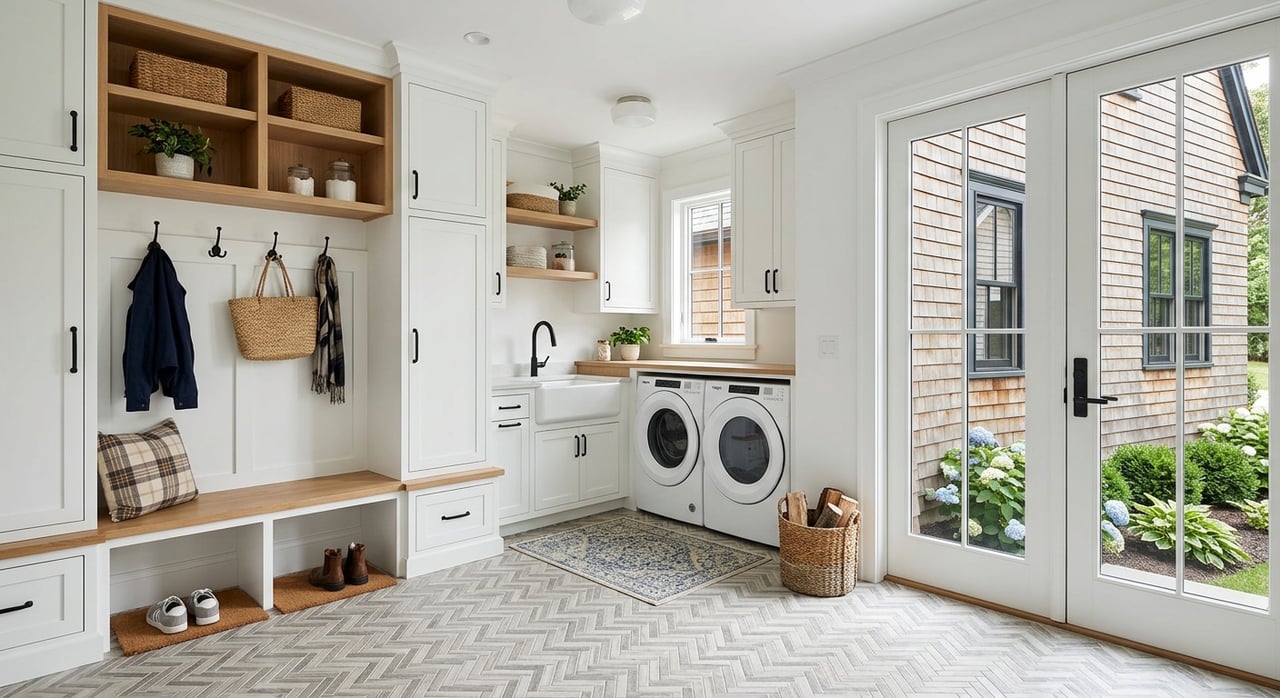
When you are making a home work for every season, good planning is not just technical. It is also about how the house lives day to day. Layout flow, storage, mudroom function, lighting, and durable finishes all become more important once a property shifts from occasional use to daily use.
That is where a design-aware approach can add real value. If you are buying or updating in Cohasset, it helps to think beyond the transaction and consider how the home will support your routines in January as well as July.
Is Cohasset the Right Full-Time Move?
If you love the South Shore lifestyle but need a town that works well beyond peak season, Cohasset makes a compelling case. The town combines a stable owner-occupied housing base, strong civic amenities, outdoor access through all four seasons, and realistic regional connections to Boston.
It is not a one-size-fits-all answer, especially if your commute or renovation scope is complex. But if you want coastal living with real year-round function, Cohasset deserves a close look.
If you are weighing a move, evaluating a seasonal property, or planning updates for a full-time transition, Victoria Pacella can help you think through the market, the home, and the design details that make the move feel seamless.
FAQs
Is Cohasset a seasonal town or a primary-home market?
- Cohasset shows many signs of a primary-home market, including an 83.0% owner-occupied housing rate, high household stability, year-round civic amenities, and everyday community infrastructure.
Is commuting from Cohasset to Boston realistic for full-time living?
- It can be, depending on your routine. Cohasset offers access to Route 3A, commuter rail, and ferry options through Hingham, with rail service to South Station at about 45 minutes.
What upgrades matter most when turning a summer home into a full-time home in Cohasset?
- Air sealing, insulation, heating and cooling planning, and humidity control are key priorities, along with permit review and any needed septic or flood-related due diligence.
What should buyers know about permits for home updates in Cohasset?
- Cohasset’s Building Department requires electronic permit applications, and work should not begin until the permit is physically issued. The department also handles occupancy permits.
What should homeowners know about septic systems in Cohasset?
- If a property uses septic, Massachusetts guidance says inspections are required within two years before a sale and when certain proposed changes require a building or occupancy permit. Routine pumping is generally recommended every three to five years.
What makes Cohasset livable outside the summer season?
- The town offers a village center, beaches, harbor access, trails and parks, public schools, library services, and broadband access that supports both recreation and everyday living throughout the year.