If you are trying to make sense of the South End condo market right now, you are not alone. Buyers want to know if they finally have more room to negotiate, and sellers want to know if strong pricing is still possible. The good news is that the numbers tell a clear story if you know how to read them. Here is how to understand today’s South End condo trends, whether you are planning to buy, sell, or simply time your next move. Let’s dive in.
South End Is Still a Condo Market
In South End, condos make up the vast majority of real estate activity. That matters because the neighborhood story is really about condo inventory, condo pricing, and condo buyer behavior, not single-family home trends.
For buyers and sellers, that creates a more useful lens. Instead of relying on broad Boston headlines, you need to watch the condo-specific signals that shape pricing and negotiation in this neighborhood.
What the Current Market Signals Show
Recent public trackers show roughly 171 to 200 active South End listings in late May and June 2026, depending on the source and date. Median listing prices also vary by platform, from about $950,000 to $1.099 million.
Those numbers do not match exactly because each platform uses a different methodology. Still, they point in the same direction: inventory is higher and the pace is slower than in a tightly constrained seller’s market.
One local analysis through mid-June 2026 reported 172 active condo listings, up 39% from 124 a year earlier. It also showed 6.59 months of supply, which is above the common 4-month benchmark for a balanced market.
That does not mean the market is weak across the board. It means you are in a more selective market, where pricing, condition, and presentation matter more.
Is South End a Buyer’s Market or Seller’s Market?
The most accurate answer is: it is mixed. Some data sources describe South End as a buyer’s market, while others still call it very competitive.
That gap is actually helpful. It shows why no single app or headline should drive your strategy. Buyers have more choices than they did a few years ago, but sellers with well-positioned condos can still attract serious interest.
If you are buying, the shift in inventory gives you more chances to compare options and spot listings that may need stronger negotiation. If you are selling, the market can still reward you, but it is less forgiving of overpricing.
What Buyers Should Watch Closely
When you shop in South End, the listing price is only the starting point. The better clues are how long a condo has been on the market, whether it has reduced price, and how it compares to recent sales.
Average days on market for sold condos was reported at 52 days through mid-2026. Active inventory was sitting around 63 days on average, which suggests a split market where stronger listings move and weaker ones linger.
That creates opportunity if you stay disciplined. A condo that has been sitting may reflect pricing friction, condition issues, or a mismatch with current buyer expectations.
Buyer Signals to Read
- Days on market: A condo that moves quickly may be priced in line with demand.
- Price reductions: About 31% of listings required a price cut in one local analysis.
- Sale-to-list trends: Many homes still sell close to asking, but not all sellers get their first number.
- Price per square foot: Use it as a guide, not a final answer.
For buyers, this means you should look beyond the surface. A polished listing with smart pricing may still command strong competition, while an overpriced unit may offer room to negotiate.
What Sellers Should Expect Now
If you are selling a condo in South End, today’s market calls for realism and precision. Recent data shows sellers achieved 98.71% of final list price and 97.91% of original list price, which tells you two things at once.
First, buyers are still willing to pay close to asking when a condo is priced well. Second, the original price matters because the market is not consistently bailing out ambitious pricing strategies.
Redfin reported a similar 98.7% sale-to-list figure, while Realtor.com showed homes selling an average of 2.65% below asking in May 2026. Together, those numbers support a practical takeaway: well-positioned listings can still perform, but stale listings often lose leverage.
Seller Expectations in This Market
- Expect buyers to compare your condo against more active options.
- Expect condition and presentation to influence showing activity.
- Expect overpricing to increase the risk of sitting, cutting price, and negotiating later.
- Expect recent closed sales to matter more than peak-era memories.
This is where a thoughtful listing strategy can make a real difference. In a market with more choice, design, staging, photography, and pricing discipline work together.
Why 2023 Pricing Should Not Set Your 2026 Strategy
One of the clearest trend lines in South End is the shift from the 2023 peak. A local market analysis reported median South End condo sale prices of $1,151,000 in 2023, $1,115,000 in 2024, and $1,005,000 in 2025.
That does not mean every condo lost value in the same way. It means the neighborhood has moved into a different pricing environment, and sellers should anchor expectations to more recent closed sales instead of older peak comps.
For buyers, this matters too. If a listing feels like it is priced for a hotter market than the one you are in today, that may be a sign to look more closely at timing, reductions, and leverage.
How to Use Price Per Square Foot Correctly
South End condos currently sit around a broad range of about $1,100 to $1,230 per square foot on public trackers. That gives you a useful neighborhood band, but it is not enough on its own to price or value a home accurately.
Recent examples show meaningful variation, from roughly $1,095 per square foot to nearly $1,500 per square foot. That spread tells you that two condos in the same neighborhood can perform very differently.
Why Price Per Square Foot Varies
- Building type
- Layout efficiency
- Interior condition
- Parking
- Elevator access
- Exact location within South End
For buyers, price per square foot can help you flag outliers. For sellers, it can help support a pricing conversation. But in both cases, it should be the beginning of the analysis, not the end.
Presentation Matters More in a Softer Market
In a faster market, average presentation can sometimes get carried by low inventory. In a market with more listings and more price sensitivity, buyers notice details faster and compare harder.
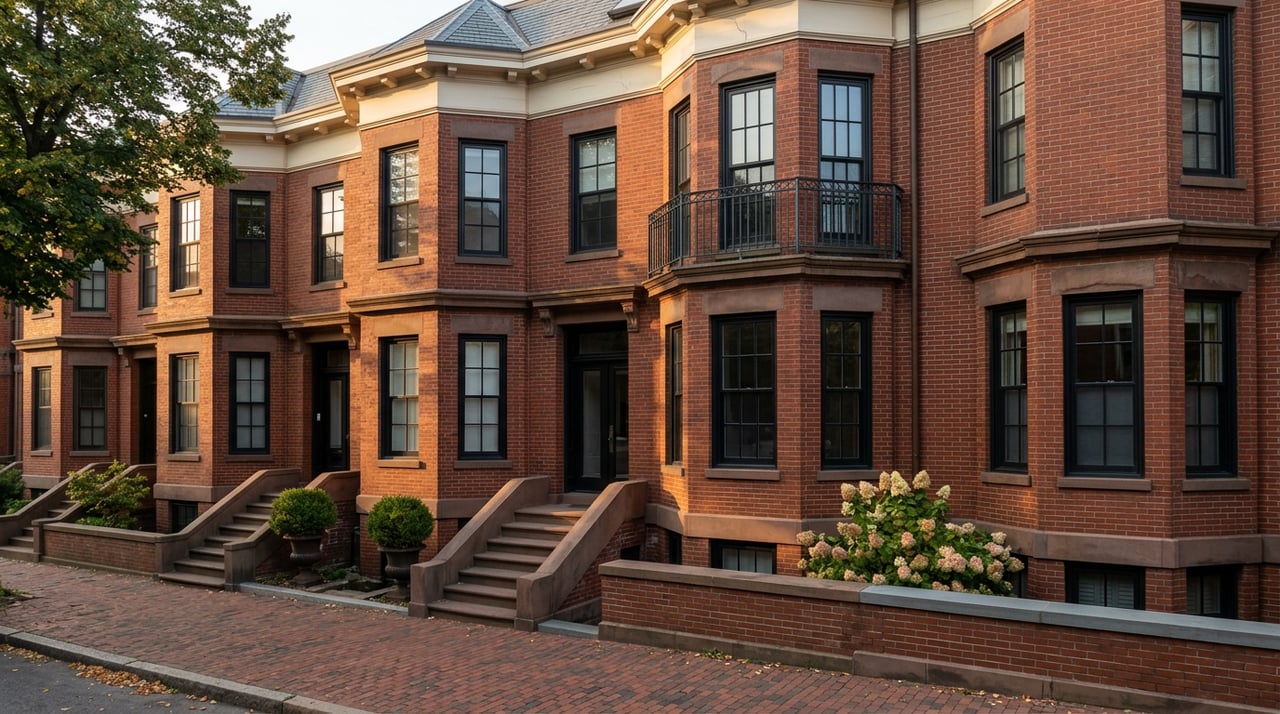
That is especially true in South End, where architecture, layout, finishes, and natural light often influence first impressions. When buyers can choose among more listings, polished presentation can help a condo stand out before anyone even steps through the door.
For sellers, this is where a design-led approach becomes practical, not cosmetic. Smart edits, clean styling, strong photography, and a listing strategy built around how buyers actually shop can support better engagement and a stronger launch.
How Buyers and Sellers Can Read the Same Market Differently
The same data can create different opportunities depending on your side of the transaction. Buyers may see more inventory as a chance to negotiate, while sellers may see it as a reason to sharpen their pricing and presentation.
Both views can be true at the same time. South End is not showing signs of distress, but it is showing signs of selectivity.
That is why broad labels like buyer’s market or seller’s market only go so far. What matters more is where your condo sits within the current inventory and how it compares on price, condition, and timing.
A Smarter Way to Approach South End Condos
If you are buying, focus on listings that have lingered, reduced, or sit outside the neighborhood price-per-square-foot band without clear justification. If you are selling, focus on current comps, realistic positioning, and a presentation plan that reflects today’s competition.
In both cases, the market is sending the same message: strategy matters. South End condos can still sell well, but the best outcomes are going to buyers and sellers who read the numbers with nuance, not just optimism.
If you are thinking about your next move in South End, working with a local advisor who understands both market data and presentation can help you act with more confidence. To talk through your condo’s value or your buying strategy, connect with Victoria Pacella.
FAQs
What do current South End condo trends mean for buyers?
- Buyers have more inventory to choose from, and some listings may offer room to negotiate based on days on market, price reductions, and pricing relative to recent sales.
What do current South End condo trends mean for sellers?
- Sellers can still achieve strong results, but pricing needs to reflect recent comps and current market conditions rather than earlier peak pricing.
Is South End Boston a buyer’s market right now?
- The market looks mixed, with higher inventory and more buyer leverage than in past years, while well-priced condos can still sell close to asking.
How should South End sellers price a condo in 2026?
- Sellers should start with recent closed condo sales, current condition, and today’s competition instead of using 2023 peak pricing as the benchmark.
How should buyers use price per square foot in South End?
- Buyers should treat price per square foot as a starting point and adjust for layout, condition, building features, parking, and exact location within the neighborhood.